How to Spot Fake News: A Practical Checklist (With the SIFT Method)
How to Spot Fake News: A Practical Checklist (With the SIFT Method)
A shocking headline lands in your feed. It matches what you already believe, or it makes you angry enough to share it straight away. That is exactly the moment to pause. Fake news is rarely a story that is invented from nothing. More often it is a real photo with a false caption, a true quote taken out of context, or an old event presented as if it happened today. The good news is that you do not need special training to catch most of it. You need a short routine you can run in under a minute, every time something feels off. This guide gives you two tools: the SIFT method, a four-step check used by fact-checkers, and a ten-point checklist you can use on any story, post or video.
Why Fake News Spreads So Fast
False stories spread quickly because they are built to travel. They use strong emotion, usually anger or fear, because strong feelings make people share before they think. They arrive as short posts and video clips, so there is no time to read the full story. And sharing is effortless: one tap sends a claim to hundreds of people who trust you. A claim shared by a friend feels more reliable than the same claim from a stranger, even when neither of them checked it. This is why media literacy matters so much today. It is not about doubting everything. It is about building the habit of checking the important things before you pass them on.
Start With the SIFT Method
SIFT stands for four moves: Stop, Investigate the source, Find better coverage, and Trace the claim. Run them in order, and most false stories fall apart before the fourth step.
1. Stop
When a post makes you feel a strong emotion, stop. Do not share it, like it or comment on it yet. Ask yourself a simple question: do I know this is true, or do I only want it to be true? That pause breaks the automatic reaction that false stories depend on. If the story is real, it will still be there in a minute. Nothing important is lost by waiting.
2. Investigate the Source
Look at who is telling you this. Is it a news organisation you recognise, a government page, an expert in the field, or an account you have never seen before? Click through to the profile or the about page. A real news outlet will show its name, its editors and a way to contact it. Be careful with pages that copy the look of a well-known outlet but use a slightly different name or web address. If the source hides who it is, treat the claim as unverified, however convincing the post looks.
3. Find Better Coverage
Search for the same claim elsewhere. A major event is almost always reported by more than one outlet. If only one unknown site is reporting it, that is a warning sign. Compare what the different reports say. When several independent, reliable outlets agree on the basic facts, the story is much more likely to be true. This is the step where a proper verification routine pays off, and our guide on how to verify a news source walks through exactly what to look for in a source before you trust it.
4. Trace the Claim to Its Original Context
Many false stories reuse real material in a false setting. A photo from one country is labelled as another. A quote from years ago is presented as a reaction to today’s news. A video clip is cut to reverse what the speaker said. Try to find the original: search for the image, look for the full video, or find the original statement. If the original context tells a different story, the version in your feed is misleading, even if every separate piece of it is real.
The 10-Point Checklist to Spot Fake News
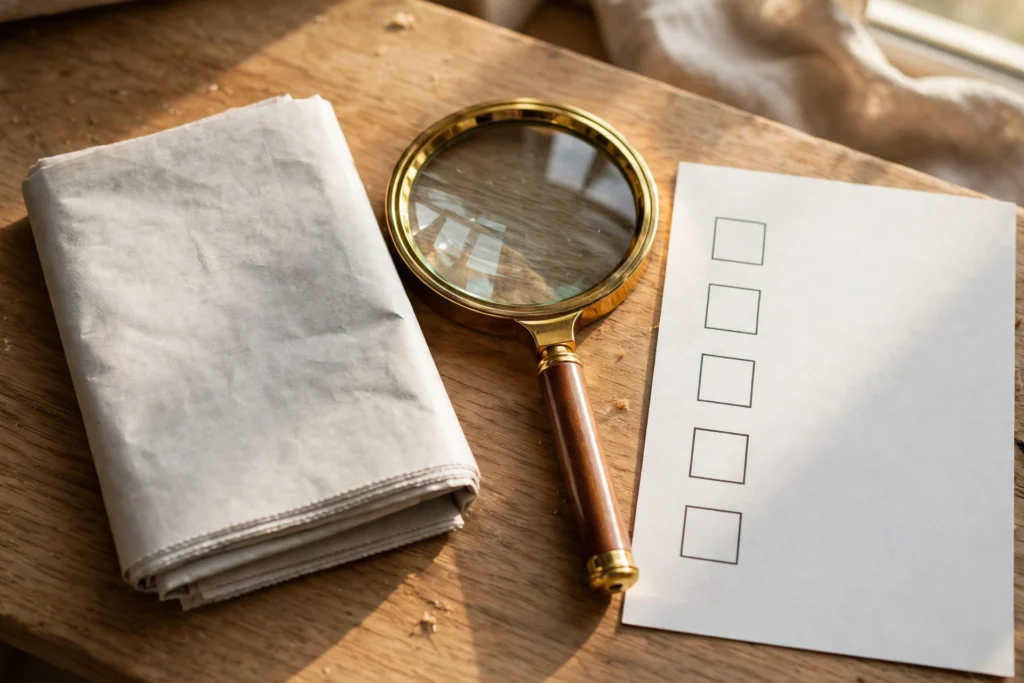
If several boxes stay unchecked, do not share it yet.
- Read past the headline. Headlines are written to earn clicks, and they often overstate or twist what the article actually says. Read the whole piece before deciding what it claims.
- Check who published it. Look for a real organisation, named authors and a contact page. Anonymous pages with no ownership details deserve extra doubt.
- Check the date. Old stories resurface as if they were new. A report from years ago can look like breaking news when the date is cropped out of a screenshot.
- Look for the original source. A trustworthy article links to the study, the statement or the data it is reporting on. If there are no links and no named sources, the claim is standing on nothing.
- Search for other coverage. Type the main claim into a search engine. If no reliable outlet is reporting it, ask why.
- Check the quotes and names. Are the people quoted real, and did they actually say this? A vague line like “experts say” with no expert named is not evidence.
- Watch for emotional language. Words designed to shock, such as “you won’t believe” or “they don’t want you to know”, are common in misleading posts.
- Inspect the image or video. Ask whether the image matches the story, and whether it could be old or taken somewhere else. A reverse image search takes seconds and often settles the question.
- Check the web address. Look closely at the URL. Misleading sites often imitate real outlets with a small spelling change or an unusual ending.
- Ask what is missing. A real report includes the other side of the story, the numbers behind a claim, and what is still unknown. If a story has none of that, it is incomplete at best.
Red Flags in AI-Generated Images and Videos
Images and videos made with AI tools are now easy to produce, and some of them look real at first glance. A few details often give them away. Look at hands and faces: extra or missing fingers, teeth that do not line up, and ears that look wrong are common flaws. Look at text inside the image: signs, labels and book covers in AI images often contain garbled or meaningless letters. Look at the background: objects can melt into each other and shadows may fall in the wrong direction. Skin can look too smooth and plastic, while hair can blend into the background in strange ways.
Video has its own warning signs. The speaker’s lips may not match the words, blinking can look unnatural, and the head may move in a stiff or jerky way. None of these signs alone proves that an image or video is fake, and AI tools improve all the time, so a clean image is not proof that it is real either. The safest check is still the source: who posted it, and does any reliable outlet carry the same picture with the same story?
What to Do When You Are Not Sure
If you have run the checklist and you are still not sure, the right move is simple: do not share it. Sharing an uncertain claim spreads it whether you meant to endorse it or not. Instead, wait and check again later, ask the person who posted it where they found it, or search for the claim with the word “fact check” added. If you later find out that something you shared was false, say so plainly and share the correction. Correcting yourself costs nothing and helps the people who saw your first post. Over time, this habit also slows false stories in your own circle, because people notice when someone checks before sharing.
Frequently Asked Questions
What is the fastest way to spot fake news?
Use the SIFT method: stop before reacting, check who the source is, look for the same story from other reliable outlets, and trace the claim back to its original context. For most posts, the first two steps already reveal the problem.
Can a story be fake if the photo is real?
Yes. A real photo can be used with a false caption, an old date or a wrong location. The image being genuine does not make the story genuine. Always check what the image originally showed and when it was taken.
Are AI images always easy to spot?
No. Some AI images look convincing, and the flaws are getting harder to see. That is why you should rely on the source and on independent coverage rather than on your eyes alone.
Should I trust a story just because many people shared it?
No. Shares measure popularity, not accuracy. A false story can be shared thousands of times before anyone checks it, and every share makes it look more believable to the next person.
What should I do if I shared something false?
Correct it openly. Delete the false post if you can, and share the correction with the same audience. People respect a correction far more than a silent deletion.
Conclusion
Spotting fake news is a habit, not a talent. Stop before you share, check the source, look for other coverage, and trace the claim to where it started. Then run the ten-point checklist on anything that still looks doubtful. You will not catch everything, but you will catch most of it, and you will stop passing the rest along. In a feed full of claims competing for your attention, that pause is the most useful skill a reader can have.






2 thoughts on “How to Spot Fake News: A Practical Checklist (With the SIFT Method)”